The Obama administration revoked a permit on Thursday for Arch Coal Inc's proposed Spruce 1 mountaintop coal mine (left) in West Virginia, effectively shutting one of the biggest in the United States and the largest single mountaintop removal mine permit in West Virginia history. The 2,300-acre operation at the Mingo Logan Coal Co.'s Spruce No. 1 coal mine in West Virginia has been mired in litigation since 1998.
The Spruce Mine is one of the largest mountaintop removal mines ever
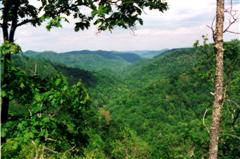
 proposed in Central Appalachia and would result in the destruction of 2,278 acres of temperate rainforest and the burying of 7.5 miles of streams in the Spruce Fork sub-watershed.
Peter Silvan (lower right), an assistant administrator for water at the EPA stated today:
"The proposed Spruce No. 1 Mine would use destructive andIn making its decision to veto the U.S. Army Corps of Engineers’unsustainable mining practices that jeopardize the health of Appalachian communities and clean water on which they depend. Coal and coal mining are part of our nation’s energy future, and EPA has worked with companies to design mining operations that adequately protect our nation’s water. We have responsibility under the law to protect water quality and safeguard the people who rely on clean water."

 approval of the 2,300-acre mine proposed for the Blair area of Logan County, EPA noted that it reviewed more than 50,000 public comments and held a major public hearing in West Virginia. EPA officials said their agency is “acting under the law and using the best science available to protect water quality, wildlife and Appalachian communities who rely on clean waters for drinking, fishing and swimming.”
EPA’s decision prohibits five proposed valley fills in two streams,
 Pigeonroost Branch, and Oldhouse Branch, and their tributaries. In the case of the Spruce mine, the agency issued a statement Wednesday saying the company's proposed practices "will lead to unhealthy levels of salinity and toxic levels of selenium that turn fresh water into salty water." It also noted that after a year of negotiation, "Mingo Logan did not offer any new proposed mining configurations in response" to the agency's concerns. (Left: example of mine run-off into streams)
The final EPA decision document withdrawing the Clean Water Act Section 404 permit is available here. EPA has also now posted some appendices to that document, including a response to comments.
The U.S. Army Corps of Engineers had approved a permit for the mine in 2007, but it had not been fully constructed.
The EPA went on to state that "EPA’s final determination onIn today’s announcement, EPA outlined these concerns that the proposed mining operation would have:the Spruce Mine comes after discussions with the company spanning more than a year failed to produce an agreement that would lead to a significant decrease in impacts to the environment and Appalachian communities. The action prevents the mine from disposing the waste into streams unless the company identifies an alternative mining design that would avoid irreversible damage to water quality and meets the requirements of the law. Despite EPA’s willingness to consider alternatives, Mingo Logan did not offer any new proposed mining configurations in response to EPA’s Recommended Determination.
EPA believes that companies can design their operations to make them more sustainable and compliant with the law. Last year,EPA worked closely with a mining company in West Virginia to eliminate nearly 50 percent of their water impacts and reduce contamination while at the same time increasing their coal production. These are the kinds of success stories that can be achieved through collaboration and willingness to reduce the impact on mining pollution on our waters. Those changes helped permanently protect local waters, maximize coal recovery and reduce costs for the operators."


- Disposed of 110 million cubic yards of coal mine waste into
 streams. (At right pollutants are released into the water by coal operations)

- Buried more than six miles of high-quality streams in Logan County, West Virginia with millions of tons of mining waste from the dynamiting of more than 2,200 acres of mountains and forestlands.
- Buried more than 35,000 feet of high-quality streams under mining waste, which will eliminate all fish, small invertebrates, salamanders, and
 other wildlife that live in them.

- Polluted downstream waters as a result of burying these streams, which will lead to unhealthy levels of salinity and toxic levels of selenium that turn fresh water into salty water. The resulting waste that then fills valleys and streams can significantly compromise water quality, often causing permanent damage to ecosystems and streams. (At right)
- Caused downstream watershed degradation (at right) that will kill wildlife,
 impact bird life, reduce habitat value, and increase susceptibility to toxic algal blooms.

- Inadequately mitigated for the mine’s environmental impacts by not replacing streams being buried, and attempting to use storm water ditches as compensation for natural stream losses.
 The mine would have employed 250 workers and produced about 44 million tons of coal over 15 years, while also burying more than seven miles of streams. The EPA used its authority under Section 404 of the Clean Water Act - which it has used only 12 other times in its history - to argue that the subsequent valley fills would harm the area's water quality, habitat and wildlife.
 Lawmakers from West Virginia said the EPA's move would hurt the state's economy. "Today's EPA decision is not just fundamentally wrong, it is an unprecedented act by the federal government that will cost our state and our nation even more jobs during the worst recession in this country's history," Senator Joe Manchin (right), a Democrat, said in a release.
 Senator Jay Rockefeller (left), also a Democrat, wrote a letter to President Barack Obama, that said: "as a nation we must not fall into the trap of forcing unnecessary choices between protecting the environment and having good paying jobs that support energy independence."
St. Louis-based Arch said it would vigorously defend the permit in
 court. EPA's revocation of the permit blocks an additional $250 million in investment and 250 jobs, the company said.
It was the latest move by the Obama administration to crack down on mountaintop
 mining, in which companies blast high peaks to uncover coal seams and often toss the resulting rubble into valleys.
Obama's EPA (left: EPA Director, Lisa Jackson) started requiring big carbon dioxide polluters, such as coal-fired power plants, to hold permits for emitting the planet-warming gas.
Environmentalists applauded the EPA action.
"A full veto of the proposed Spruce No. 1 Mine is a true victoryfor the communities nearby, and for all Americans across the country who are fighting to protect our precious natural resources from industrial pollution," said Joan Mulhern, senior legislative counsel for Earthjustice.

"While this is only one mine of many, we hope this veto will be the beginning of the end of the devastating practice of mountaintop removal mining by bringing the fundamental legal protection of the Clean Water Act to the whole Appalachian region, once and for all."

Joe Lovett, director of the Appalachian Center for the Economy and the Environment, said:
 It is a relief after all of these years that at least one agency has shown the will to follow the law and the science by stopping the destruction of Pigeonroost Hollow and Oldhouse Branch. (See map at right; click for larger view)
 Today, the EPA has helped to save these beautiful hollows for future generations. Unfortunately, the Spruce Mine’s impacts are not unique. Although we are grateful for the EPA’s action today, EPA must follow through by vetoing the scores of other Corps permits that violate the Clean Water Act and that would allow mountaintop mines to lay waste to our mountains and streams."
Source:
The Washington Post,"Obama administration cracks down on mountaintop mining", accessed January 15, 2011
West Virginia Gazette,"Breaking news: EPA vetoes Spruce Mine permit",by Ken Ward, accessed January 15, 2011
Reuters,"U.S. axes permit for Arch's giant mountain coalmine", accessed January 15, 2011