Tuesday, January 12, 2010

The ArcGIS 9.4 release was renamed ArcGIS 10


Hvorfor ikke 2010 ...
/Sik


Why not 2010 ...
/Sik


Quote

Note: The ArcGIS 9.4 release was renamed ArcGIS 10 in January. Listen to ESRI President Jack Dangermond explain why in a podcast[MP3].

ArcGIS 10 is a major release of all aspects of ArcGIS and is designed to help you perform your GIS work faster. Some of the highlights include the following:

  • Faster, more responsive drawing performance including smooth, continuous panning of your data
  • Easier access to most commonly used geoprocessing tools
  • New Search window in ArcMap to let you quickly locate maps, data, and tools
  • Catalog window built into ArcMap for quick data access
  • Easier and faster ways to find and use symbols and tools
  • Auto hide and dockable windows (e.g., table of contents) so your focus remains on the map
  • Ability to execute geoprocessing in the background, allowing you to continue to interact with your map
  • Automation of additional workflows with Python (maps and layers)
  • Easy-to-use Web APIs and software developer kits (SDKs)
  • Single-line simplified geocoding
  • New geoprocessing tools for multiscale map creation (reduce feature count, complexity, and conflicts)
  • Support for layouts with multiple pages for producing map books, including PDFs
  • Dynamic layout of text elements (title, date, page number, etc.)
  • Map templates for high-quality map generation on the desktop and the Web
  • Optimized map service (introduced in 9.3.1) supporting cartographic representations and Maplex labeling authored in ArcMap
  • New compact cache format facilitating the creation and management of large map caches
  • Enhanced integration of ArcGIS Server with ArcGIS Desktop for map production via geoprocessing services and Python
  • Open access to the geodatabase
  • Integration of a new window in ArcMap to simplify project management and collaboration
  • New Query layers that allow you to access all data (including spatial data) stored in relational databases via standard SQL
  • New sketch-based editing so you can choose from a customizable on-screen palette of features in desktop and Web clients
  • Easier access to common editing tools in ArcMap, ArcScene, and ArcGlobe
  • Ability to edit the geodatabase over the Web with the new Feature Editing Service
  • New customizable ArcGIS Mobile application for mobile and Tablet PC devices
  • Tight integration with ArcGIS Online search and sharing application
  • Easy to create and distribute projects that may include data, layers, maps, tools, scenes, globes, diagrams, and add-ins
  • Easier to share and organize geographic data on the enterprise through the new Search service in ArcGIS Server
  • Improved geoprocessing framework
    • ModelBuilder now supporting undo/redo, iterators, and ToolTips
    • Improved map algebra with Python support
  • New Fuzzy Overlay and Fuzzy Reclassify tools for better site selection and suitability modeling
  • Location/Allocation modeling of network datasets
  • New tools for image classification for easier collection and evaluation of training samples
  • New ecological sampling design tools accommodating user-defined spatial criteria
  • New types of graphs for visualizing analysis results
  • New Unicode-aware geocoding engine supporting international languages and more flexible address entry and matching
  • Improved 3D data management and creation
  • New 3D editing tools in ArcScene and ArcGlobe
  • Additional 3D analysis and visualization tools
  • Included templates and best practices for creating virtual cities
  • Creation and management of time-based data
  • Can display and animate temporal datasets
  • Can publish and query temporal map services
  • Fast, dynamic raster display
  • Web API access to image services
  • On-the-fly processing and mosaicking
  • New compact cache for easier management of large map caches
  • Enhanced optimized map services support for advanced ArcGIS cartography
  • New, out-of-the-box configurable Web mapping application for ArcGIS Server
  • New capability to deploy out-of-the-box ArcGIS Mobile projects to in-vehicle and tablet-based PCs
  • Enhanced data collection experience with streaming GPS, photo attachments, and location tracking for ArcGIS Mobile applications
  • Can quickly configure mobile projects using the new Mobile Project Center to simplify the deployment of projects
  • Extended SDK enabling developers to create extensions to ESRI-provided out-of-the-box ArcGIS Mobile applications
  • Ability to check out shared ArcGIS Desktop 10 licenses on a different computer (i.e., field units, home machine, or other machine) for temporary use in a controlled environment

  • The ArcGIS 10 beta release is now available. ArcGIS 10 is expected to be available in the second quarter of 2010.

Read more: http://www.esri.com/software/arcgis/whats-new/whats-coming.html

Friday, January 8, 2010

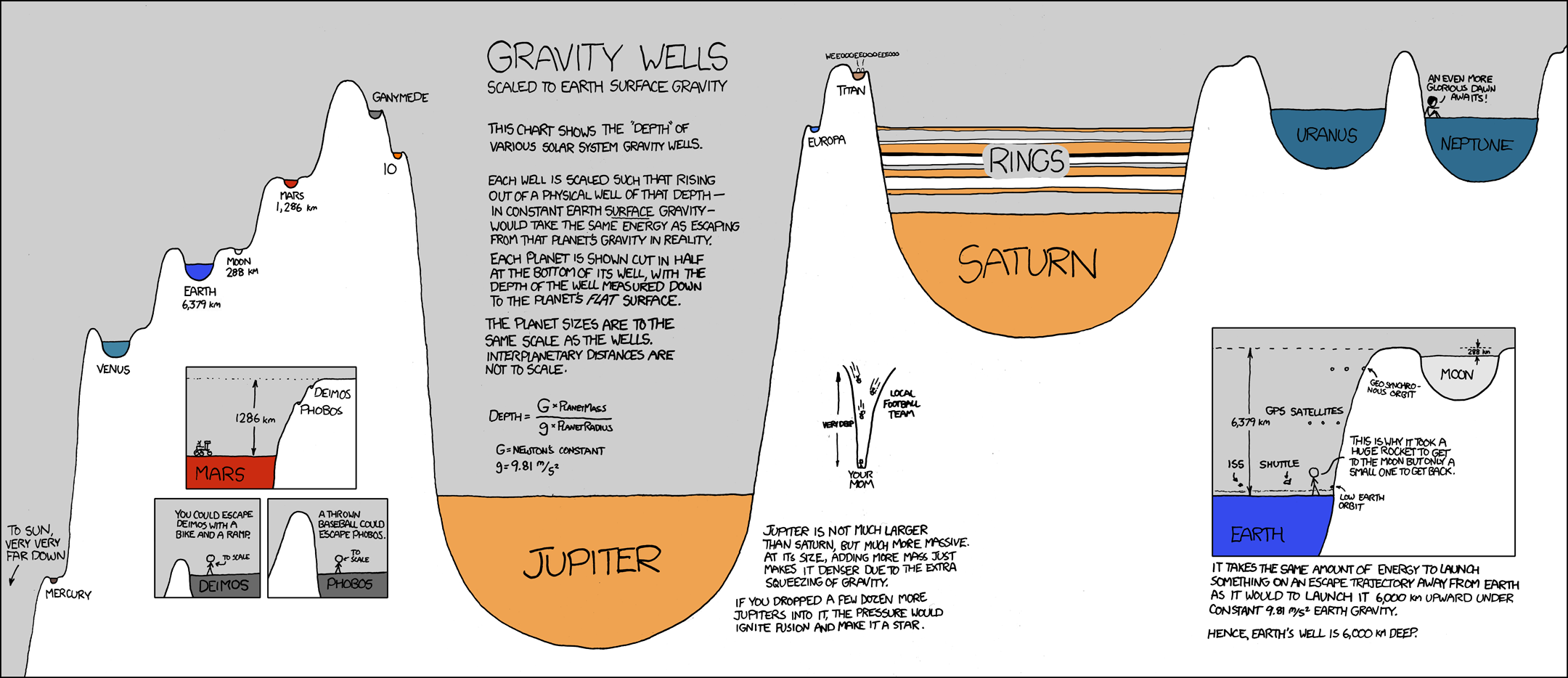
Need to Escape Jupiter’s Gravitational Pull? Good Luck


Først skal du lige komme dertil ...
/Sik


First you need to get there ...
/Sik


Quote

By Nathan

Will Future Mobile Apps “Bump”?


Jeg bumpede ind i dette og jeg kunne kun sige øøøh ...
/Sik


I bumped into this and my mind said huh ...
/Sik


Quote

Adam DuVander

Last month mobile-to-mobile communications company Bump decided to share its technology, which allows for data transfer between two iPhone or Android phones. For example, its flagship iPhone app swaps contact info and photos when two phones “bump” (as in “fist bump”) near each other. Bump introduced an API, but to little fanfare.

Why there hasn’t been much interest, at least publicly, is puzzling. As TechCrunch wrote, transfering data between devices is still difficult:

It’s a problem that’s as frustrating as it is ridiculous: many of us are now walking around with incredibly powerful mobile phones capable of rendering 3D graphics and multitasking. Yet transferring small bits of data between two nearby phones is still often a total pain.

Bump Four, a Connect Four-like game

Bump has created several apps with its technology, including a Connect Four game. The company claims to have been “overwhelmed” by developer interest. And it’s reasonable to expect that they received a number of requests to join what is, essentially, a private beta. But is there enough interest for Bump to become a platform for mobile app communications? [...]


Read more: http://blog.programmableweb.com/2010/01/08/will-future-mobile-apps-bump

Thursday, January 7, 2010

Roller Coasters Can Be Such A Headache


Dodonpa roller coaster, 170 feet tall, 106.9 mph. Located in Fuji-Q Highland amusement park in Japan.

In case you didn't know, there's a reasonably sized literature on roller coaster headaches. An especially interesting case was reported by Fukutake and colleagues (2000) in Japan. A 24 year old woman frequently visited amusement parks, including Fuji-Q Highland -- home to 3 monster roller coasters (she rode each of them twice):
One of these, the Fujiyama, is the world’s highest roller coaster at 259 feet. It has a drop of 230 feet at an angle of 65° and has the world’s fastest speed of 81 mph. There was no direct trauma to her head or loss of consciousness during the rides.
The headache started when she was on her way home from the park. She went to the hospital when it persisted for 4 days.
The woman’s headache was constant, mainly suboccipital, worse in the evening, and partially relieved by rest. ... Neurologic examination results were normal. Her pupils were equal and reactive to light, and there was no papilledema or retinal hemorrhages. Routine laboratory tests for blood and urine all were normal. Tension-type headache was initially diagnosed, and muscle relaxants were prescribed for 4 weeks with some benefit; the headaches fluctuated but were unrelieved.

Two months later, MRI of the head ruled out an organic problem and showed bilateral subdural hematomas with neomembranes.

Figure (Fukutake et al., 2000). T1-weighted MRI of the head showing bilateral subdural hematomas with neomembranes.

The neurosurgeons removed the hematomas, and the patient's headaches resolved. She was completely symptom free 8 weeks later. The article doesn't mention whether she resumed riding roller coasters, however.

But Are Pillow Fights More Dangerous Than Roller Coasters?

Another paper compared head motions that occurred in 4 participants when they rode 3 different roller coasters at Six Flags, drove bumper cars, and had a pillow fight (Pfister et al., 2009). What are the implications for brain injury? they asked.
The 18 mph (8.1 m/s) car crash simulation resulted in the highest measurements of linear acceleration, linear velocity, and rotational velocity of the head. The highest level of rotational acceleration was measured during the pillow fight. Interestingly, the pillow fight generated peak head accelerations and velocities greater than the 3 roller coaster rides. Despite the difference in the 3 roller coaster rides (ie, speed, turns, loops), they lead to similar head motions. It is important to note that variations in head motions were small between the roller coaster rides, pillow fight and 5 mph (2.2 m/s) car bumper hit.
Mostly dismissive of the case study literature on roller coaster headaches, these authors ended on a pro-roller coaster note:
Our current empirical data supports 2 scientific panels' opinions as well as previous results from a computational model. Specifically, head motions during roller coaster riding fall within the range of normal activities and are far below thresholds of TBI in normal individuals.

References

Fukutake T, Mine S, Yamakami I, Yamaura A, & Hattori T (2000). Roller coaster headache and subdural hematoma. Neurology, 54 (1) PMID: 10636168

Pfister, B., Chickola, L., & Smith, D. (2009). Head Motions While Riding Roller Coasters The American Journal of Forensic Medicine and Pathology, 30 (4), 339-345 DOI: 10.1097/PAF.0b013e318187e0c9

Wednesday, January 6, 2010

OpenSimulator - a 3D Application Server.


Den 3. dimmension er åben ...
/Sik


The third dimmension is now open ...
/Sik

Quote

OpenSimulator is a 3D Application Server. It can be used to create a virtual environment (or world) which can be accessed through a variety of clients, on multiple protocols. OpenSimulator allows you to develop your environment using the technologies you feel work best - we've designed the software to be easily extendable through loadable modules to build completely custom configurations. OpenSimulator is released under a BSD License, making it both open source, and commercially friendly to embed in products.

Out of the box, OpenSimulator can be used to simulate a virtual environment similar to Second Life™ (including client compatibility). Other environments, protocols and features are supported via add on modules. For a list of available modules check out our forge site.

Although OpenSimulator is still considered alpha software, many people are doing exciting things with it.

Features

Even though OpenSimulator is relatively young software it already has many useful features

  • Supports creating multiple 'worlds' in a single application instance.
  • Supports multiple clients and protocols - access the same world at the same time via multiple protocols.
  • Extensive ability to customize your avatar, both with custom clothing, skins, and attached objects.
  • Realtime Physics Simulation, with multiple engine options including ODE.
  • The ability to create content real time in the environment using in world building tools. What you see is what you get.
  • In world application development using a number of different languages, including LSL/OSSL, C#, JScript and VB.NET

Using OpenSimulator

The fastest way to get started using OpenSimulator is to create an account on OSGrid, then download the Hippo Viewer or Linden Lab's Second Life viewer (amongst others) to connect to OSGrid. This process should take no longer than 10 minutes, and will give you a flavor for what OpenSimulator is like.

You can also easily connect to any one of the many public grids on the internet.

Or you could run a simple standalone OpenSim on your Windows desktop to create and preview content. Here is a tutorial showing how to get opensimulator running in stand-alone mode..

Running your own OpenSimulator

If you are interested in running your own OpenSimulator server, to host your own 3D environments you'll want to check out the following links:

Participating in the OpenSimulator Community

OpenSimulator is an open source project, and is powered by the community members that devote time and energy to the effort. There are many ways to participate and contribute to the community:


Read more: http://opensimulator.org/wiki/Main_Page

Tuesday, January 5, 2010

Land Surveyors United


Landinspektører!
/Sik


Justin Farrow just reminded me about this site - First mentioned here i december 2008: http://gisdk.blogspot.com/2008/12/land-surveyors-united.html
/Sik

Quote

Land Surveyors United

Land Surveyors United
is the first social network in the world exclusively geared for land surveying professionals and the GPS, mapping and geomatics community. This group creates a virtual space for surveyors to post their technology related questions, experiences, tips, tricks and advise for the field. LSU members are professional surveyors, of course, most of which spend the majority of their day in the woods or along the side of the road measuring and creating the landscapes of our cities and towns. As an online community comprised entirely of like minded individuals, LSU provides a place to find equipment, collaborate and troubleshoot problems in the field and find reference materials related to surveying. [...]


Read more: http://landsurveyorsunited.ning.com/

Overmedicated, Undermedicated?


It appears to depend on who you are (and who you ask), according to two papers in the January 2010 issue of Archives of General Psychiatry. According to the press releases:
More US patients receive multiple psychotropic medications

An increasing number of U.S. adults are being prescribed combinations of antidepressants and antipsychotic medications...

. . .

To examine patterns and trends in psychotropic polypharmacy—or the prescription of more than one psychiatric medication—[Mojtabai & Olfson, 2010] analyzed data collected from a national sample of office-based psychiatry practices. The number of medications prescribed and specific medication combinations were assessed from a total of 13,079 office visits to psychiatrists by adults (18 years or older) between 1996 and 2006.

. . .

"The increasing trend of psychotropic polypharmacy was mostly similar across visits by different patient groups and persisted after controlling for background characteristics," the authors write. Combinations of antidepressants with sedative-hypnotics were the most common medication combinations overall (23.1 percent), followed by combination of antidepressants with antipsychotics (12.9 percent) and combinations of two types of antidepressants (12.6 percent).

"While the evidence for added benefit of antipsychotic polypharmacy is limited, there is growing evidence regarding the increased adverse effects associated with such combinations," the authors write.
On the other hand...
Half of depressed Americans go untreated...

Antidepressants under-prescribed, particularly among minorities

. . .

The majority of treated patients, nearly 45 percent, received psychotherapy with no medication. Only 34 percent of patients were prescribed antidepressants. Of that number, Mexican Americans and African Americans were prescribed antidepressants a third less often than Caucasians. Factors such as education, health insurance and income did not explain the lower rates of medication use.
...and:
Few Americans with major depression receive adequate treatment

Many U.S. adults with major depression do not receive treatment for depression or therapy based on treatment guidelines, and some racial and ethnic groups have even lower rates of adequate depression care...

. . .

[González et al., 2010] assessed the prevalence and adequacy of depression care among different racial and ethnic groups in the United States by analyzing data from the National Institute of Mental Health's Collaborative Psychiatric Epidemiology Surveys. This initiative combines three nationally representative studies, during which face-to-face interviews were conducted with 15,762 individuals age 18 and older throughout the country between 2001 and 2003.

Of the adults surveyed, 8.3 percent had major depression, including 8 percent of Mexican Americans, 11.8 percent of Puerto Ricans, 7.9 percent of Caribbean blacks, 6.7 percent of African Americans and 8.5 percent of non-Latino whites.

Overall, more than half of those with depression received at least one form of depression care, but only about one in five (21.3 percent) had received at least one form of therapy that conformed to established treatment guidelines within the previous year.
Perhaps Neuroskeptic will have more to say about this...

References

González HM, Vega WA, Williams DR, Tarraf W, West BT, Neighbors HW (2010). Depression Care in the United States: Too Little for Too Few. Arch Gen Psychiatry 67:37-46.

Mojtabai R, Olfson M (2010). National Trends in Psychotropic Medication Polypharmacy in Office-Based Psychiatry. Arch Gen Psychiatry 67:26-36.